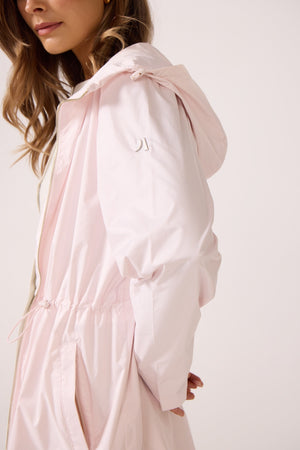
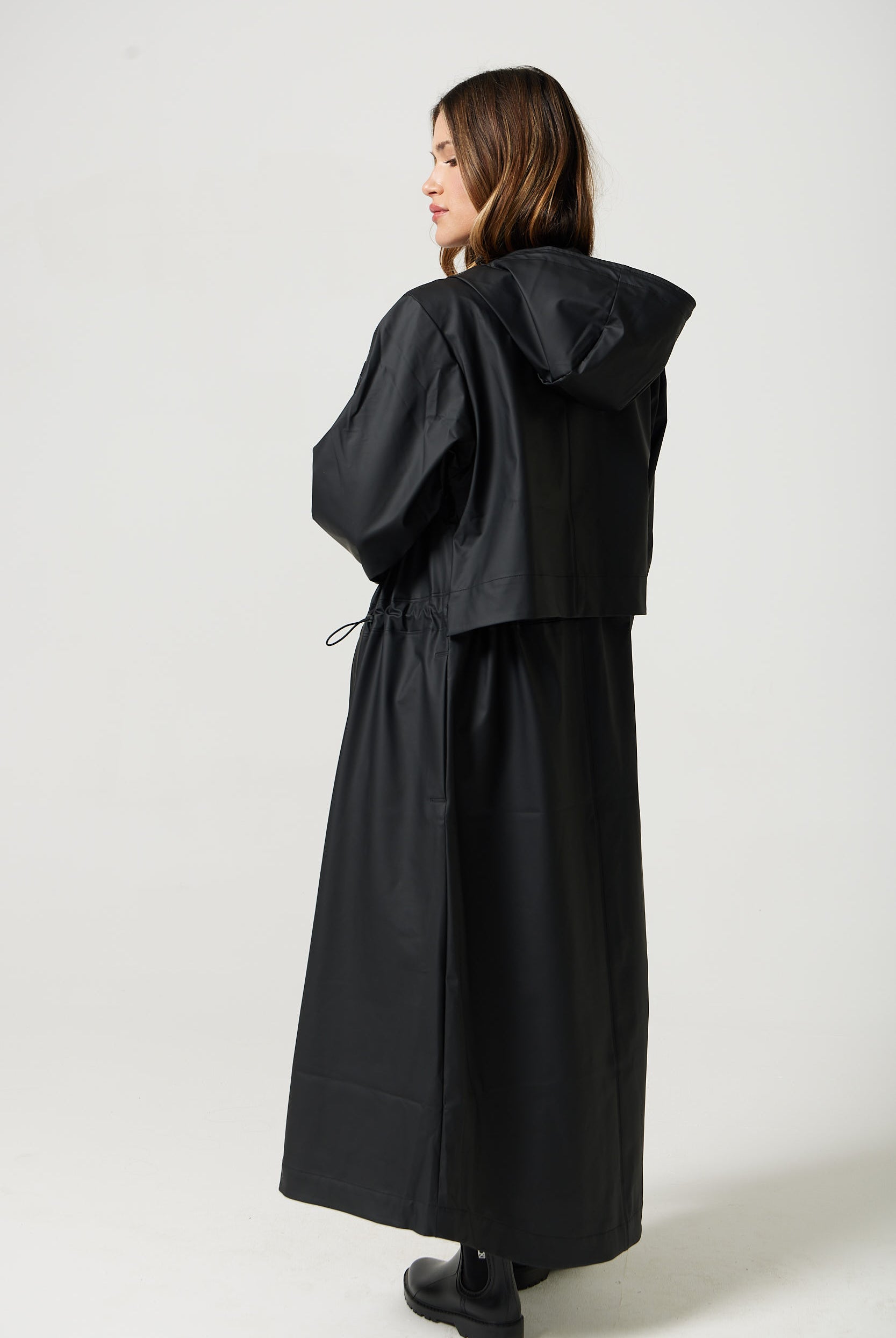
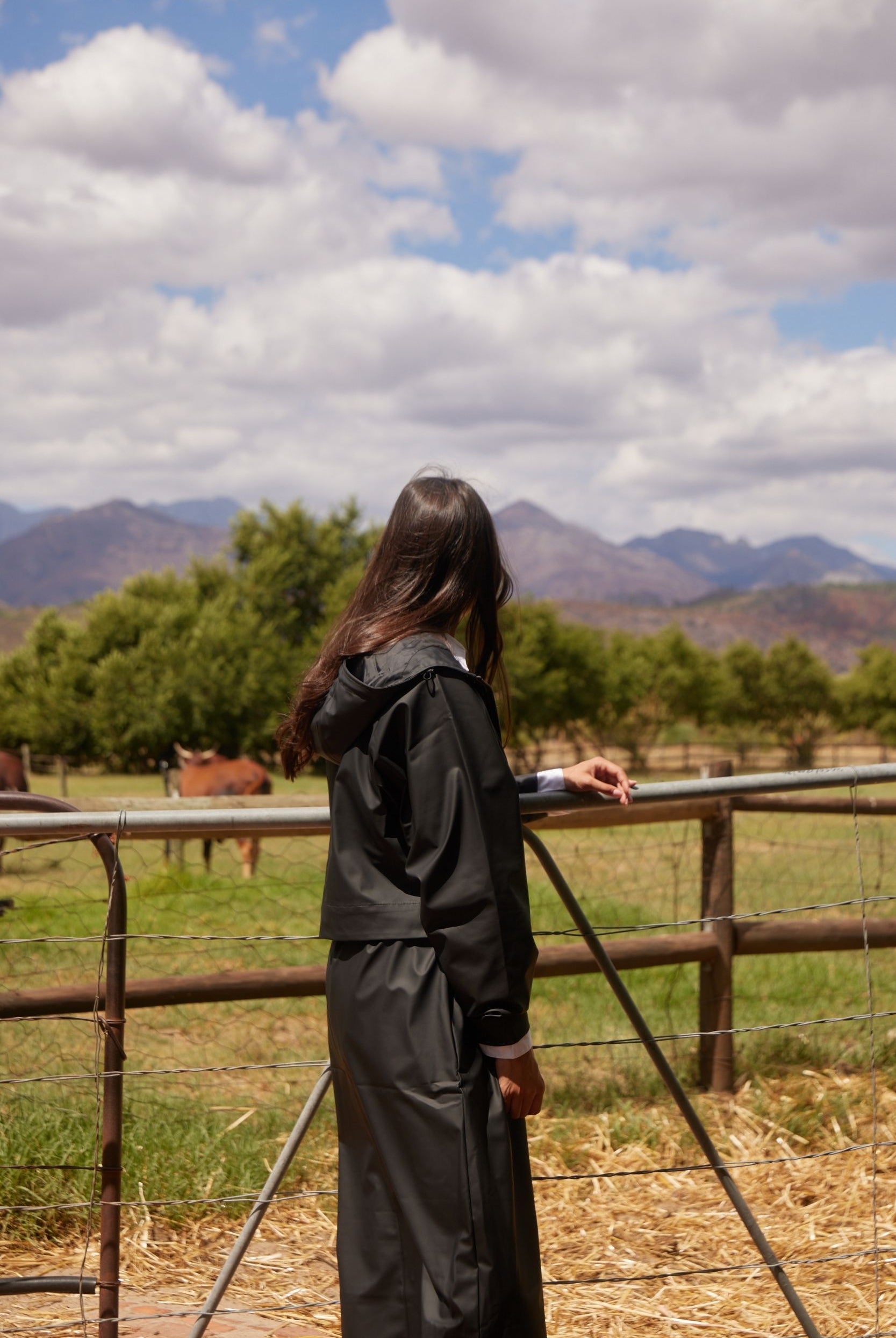
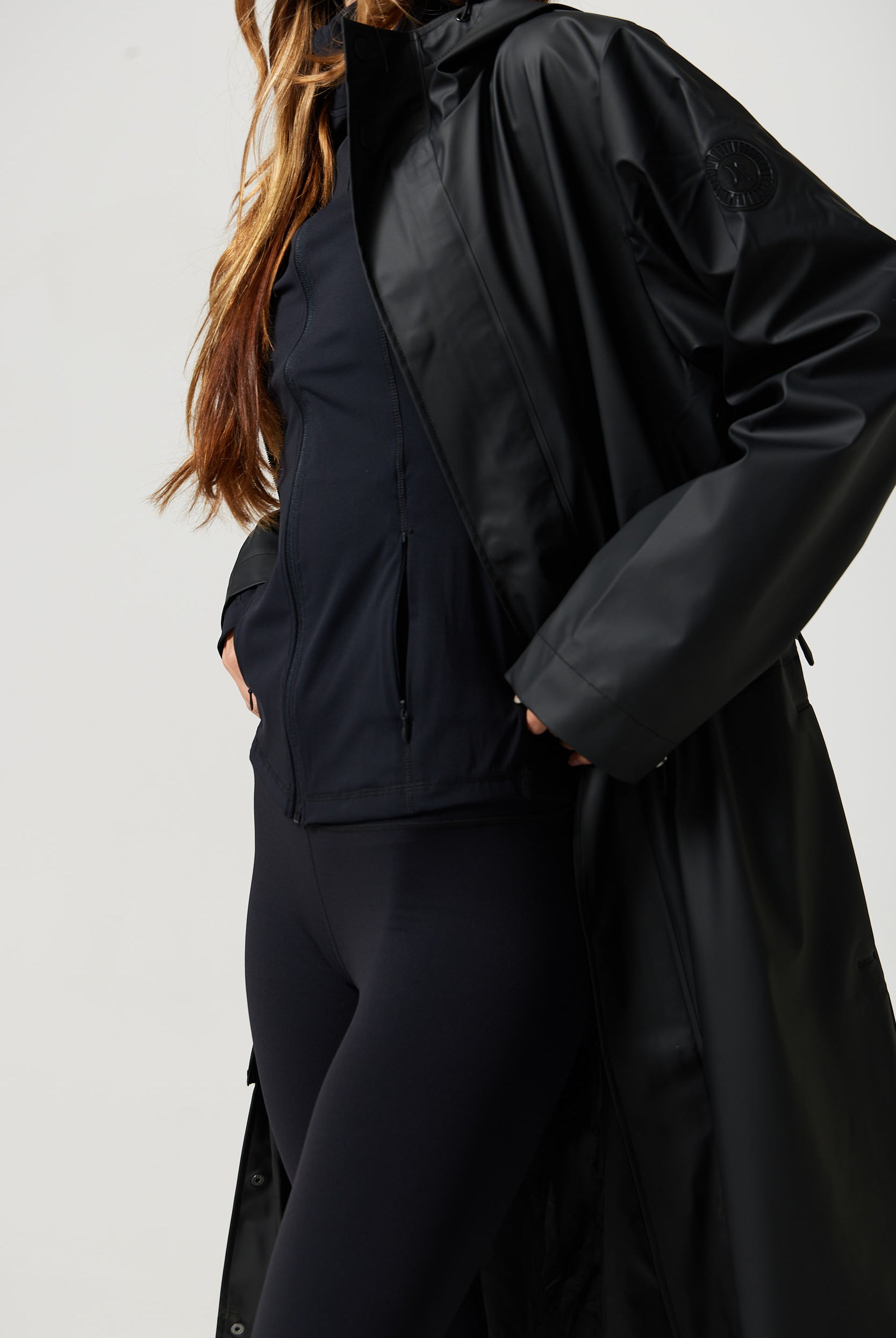
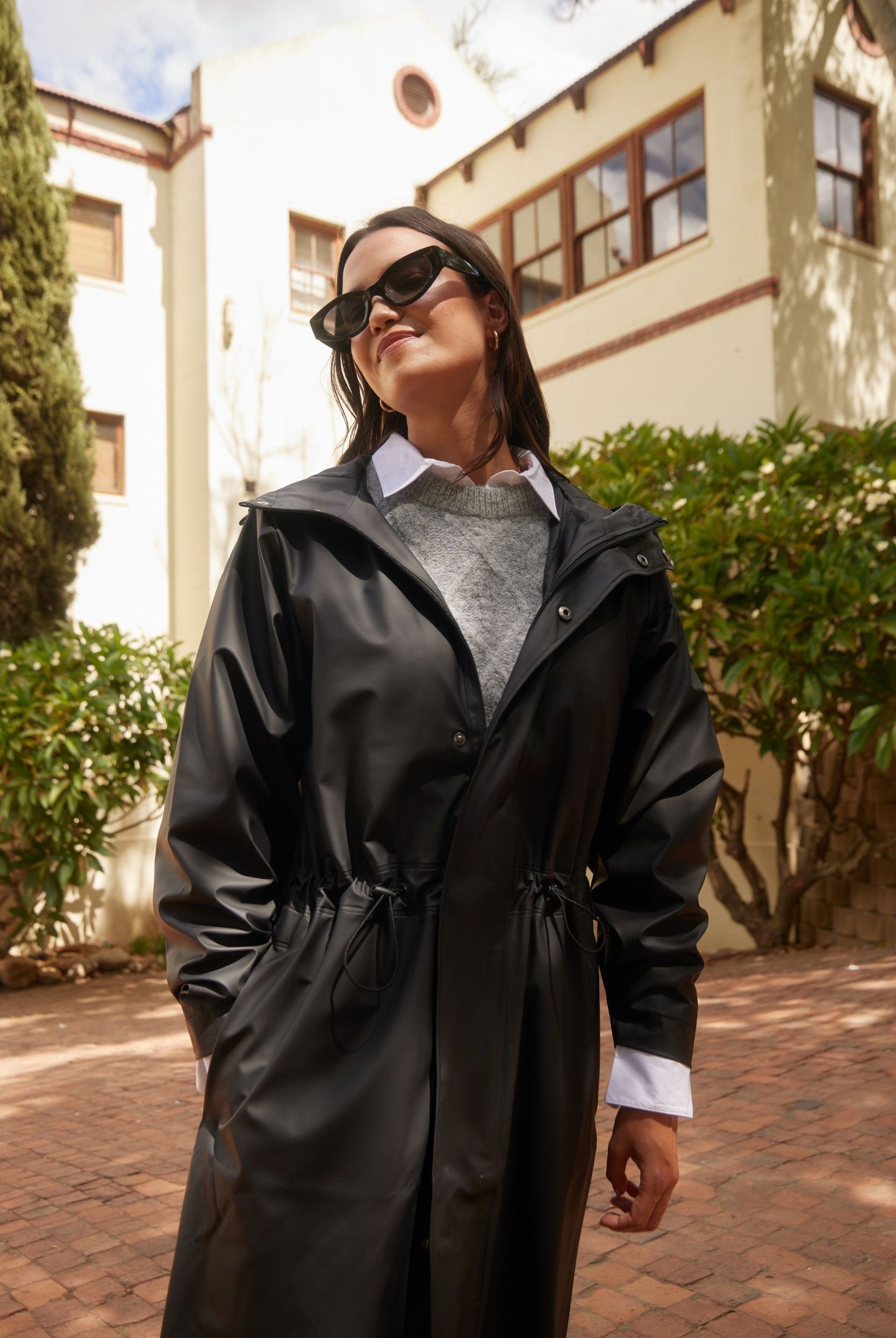
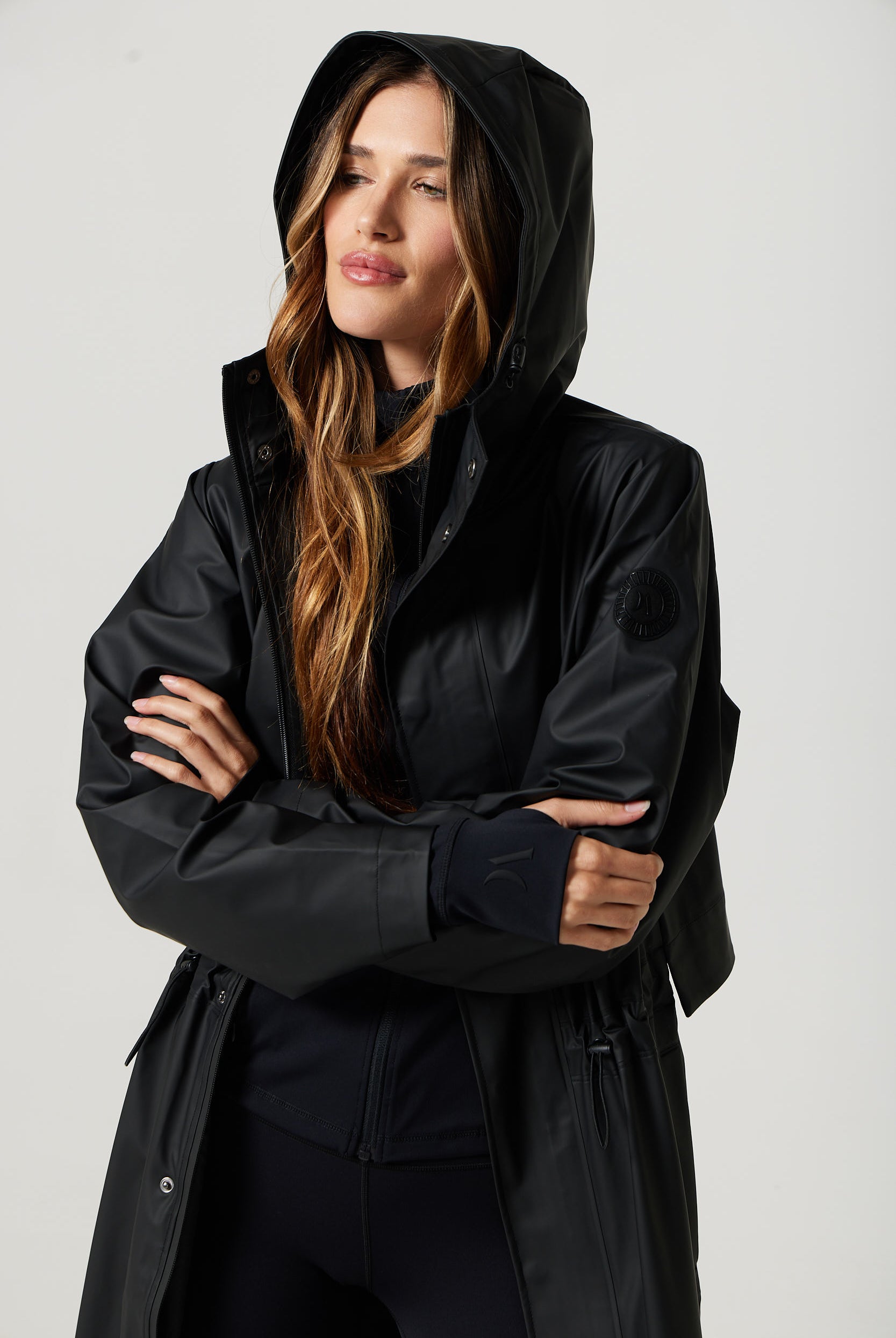
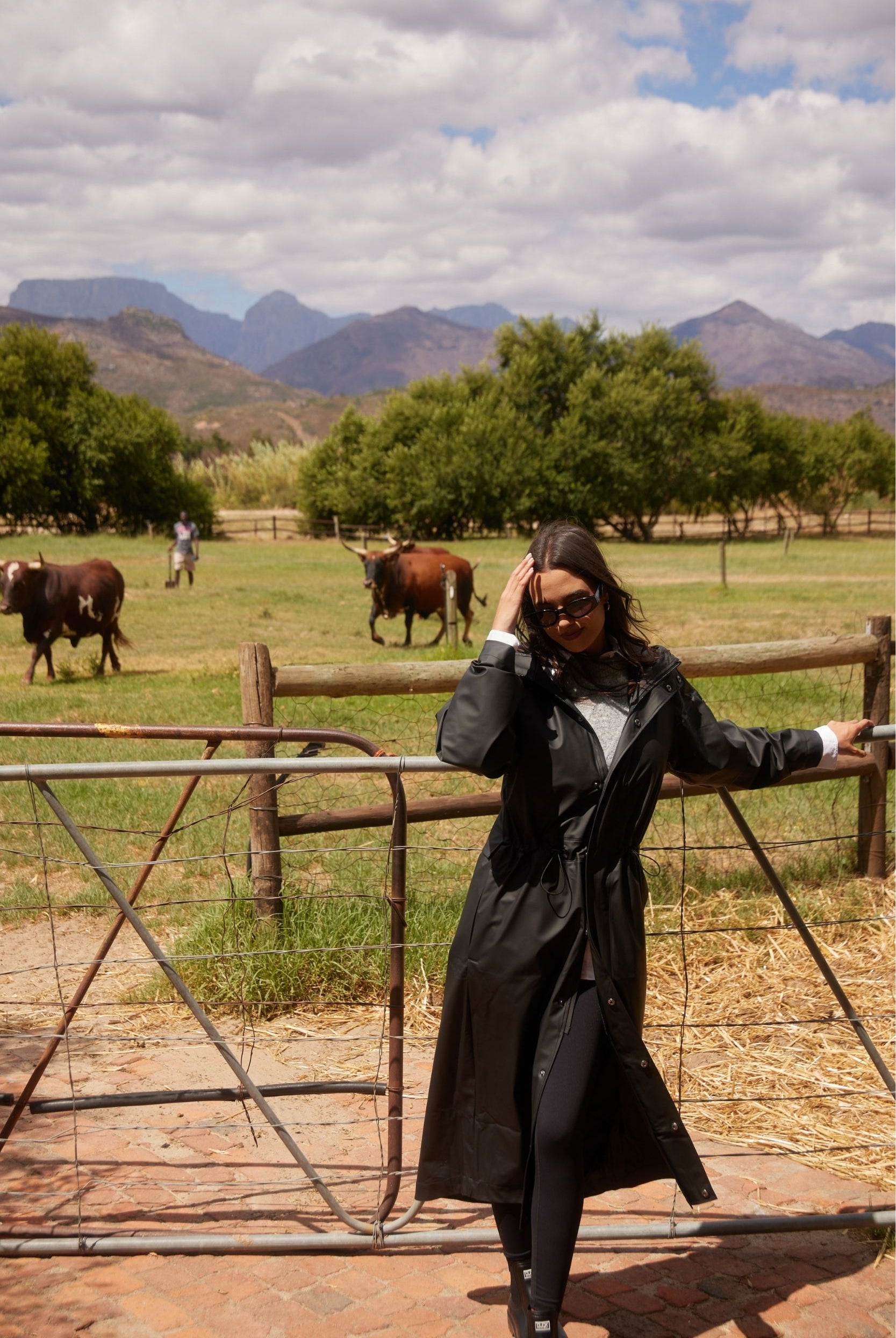
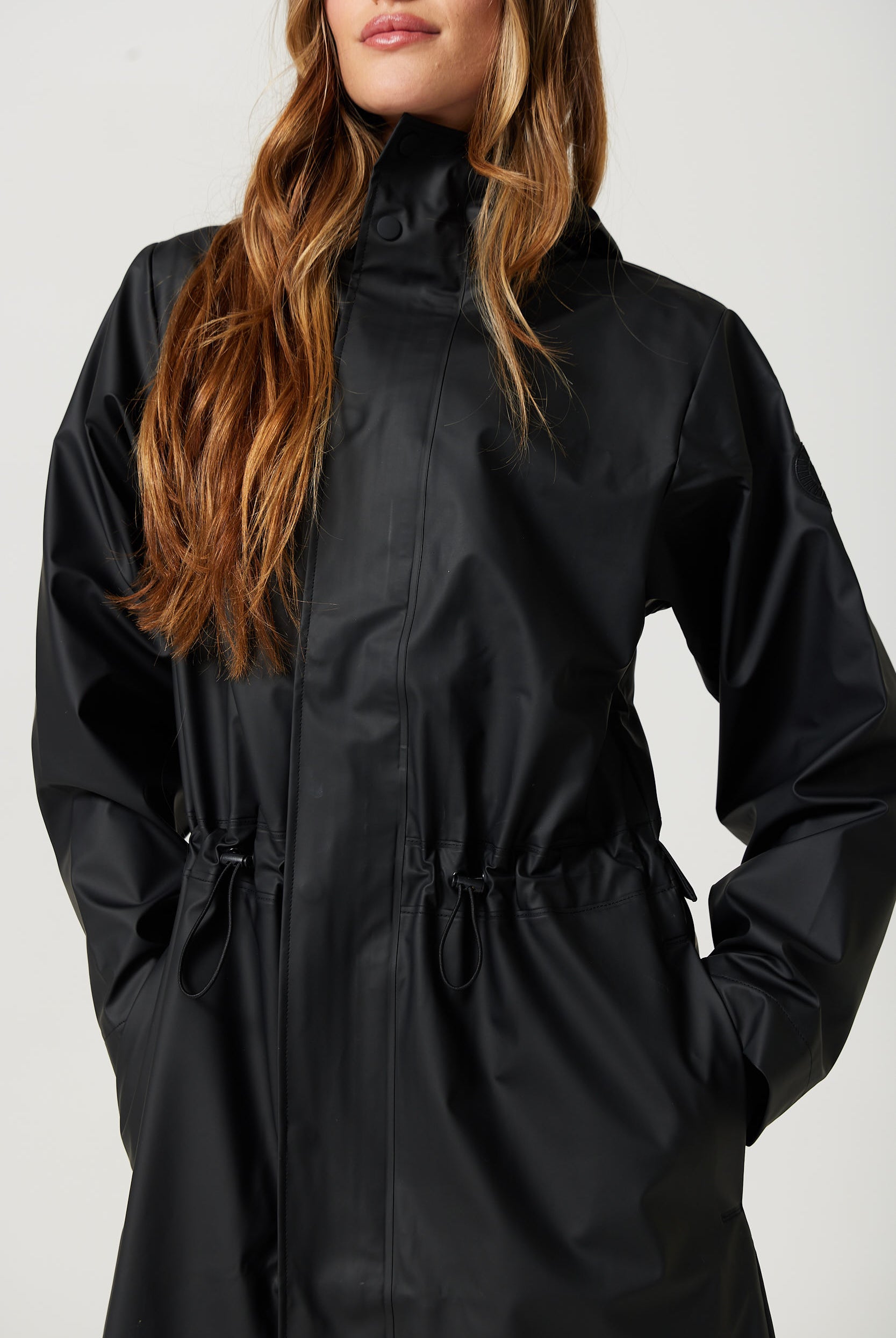
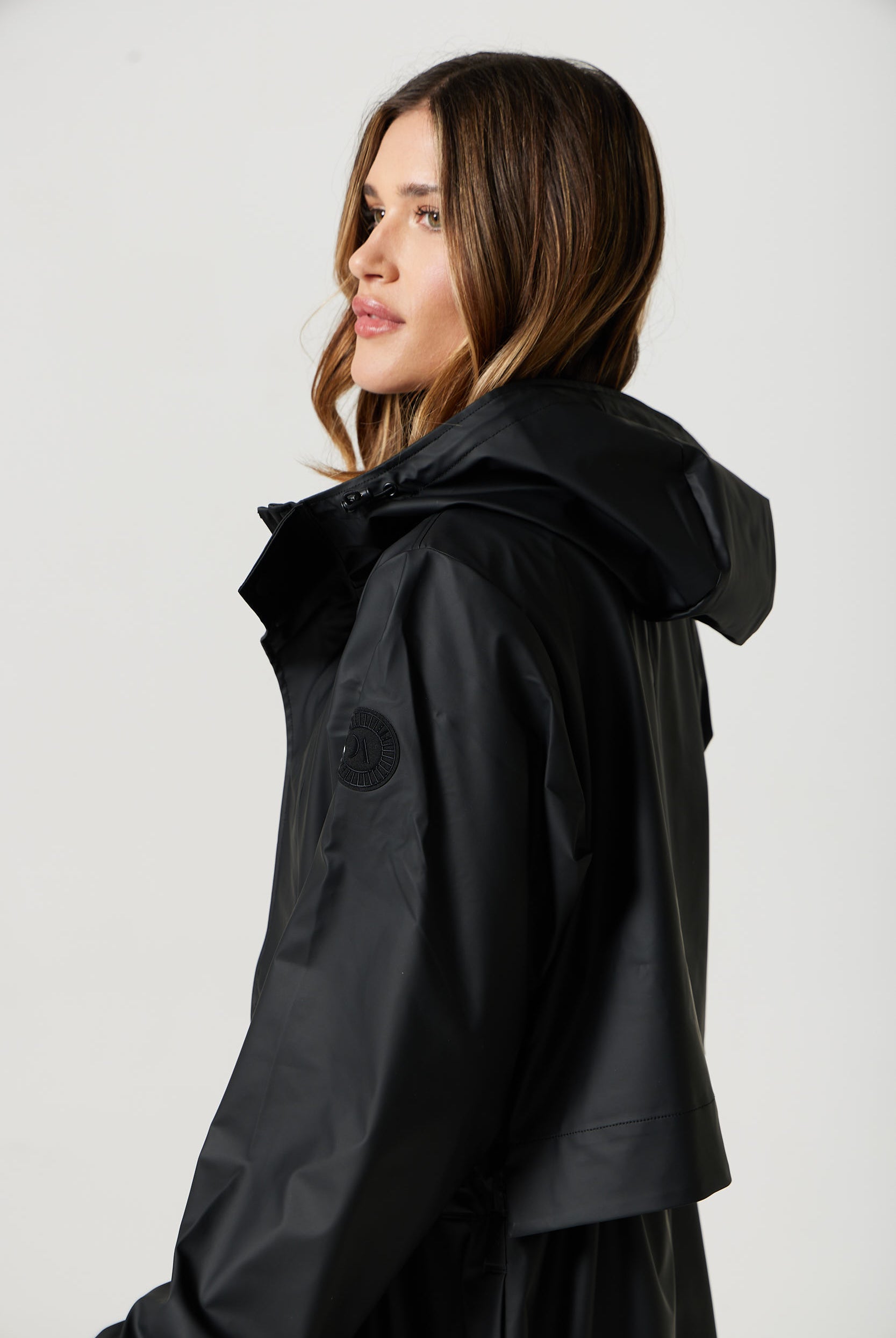
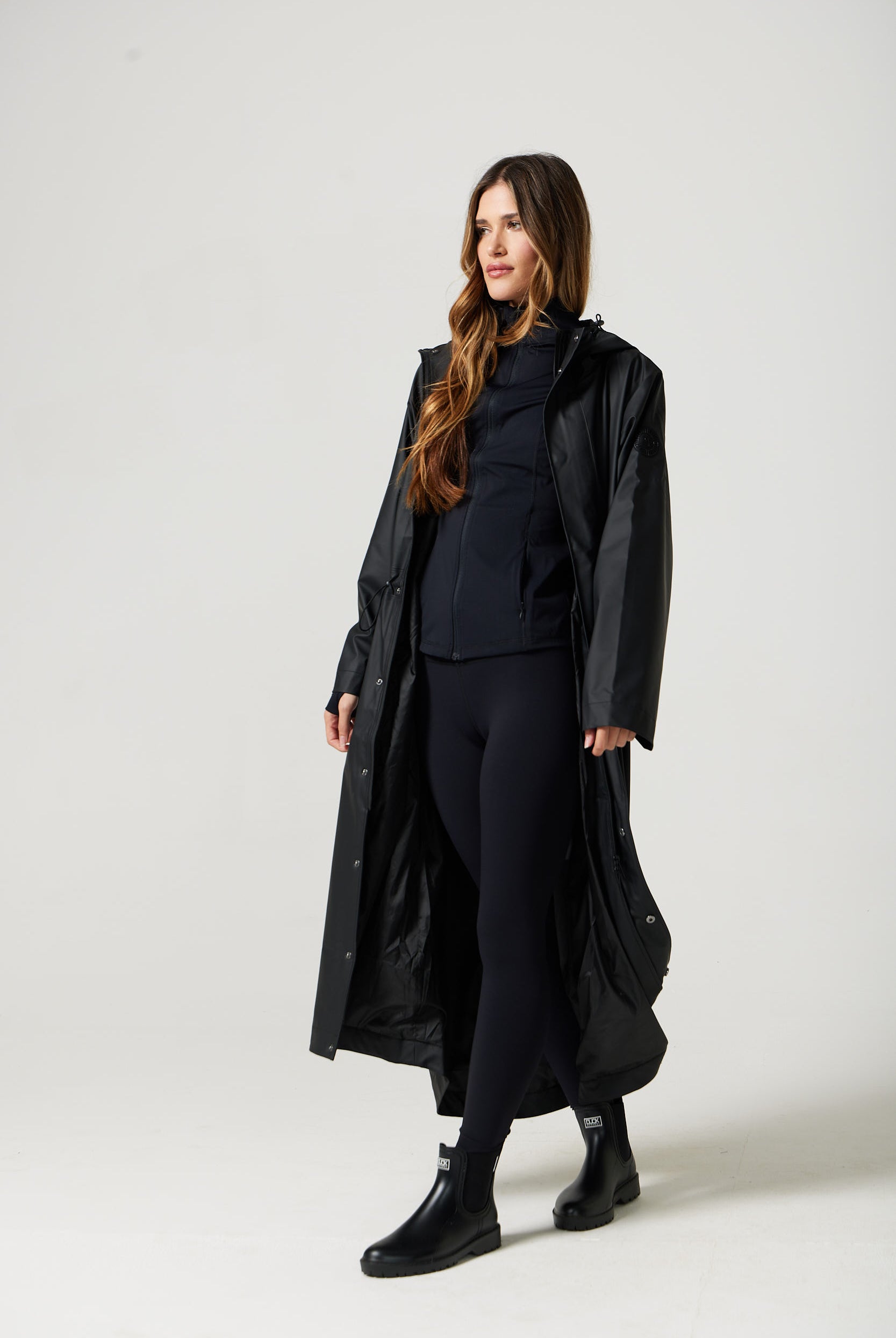
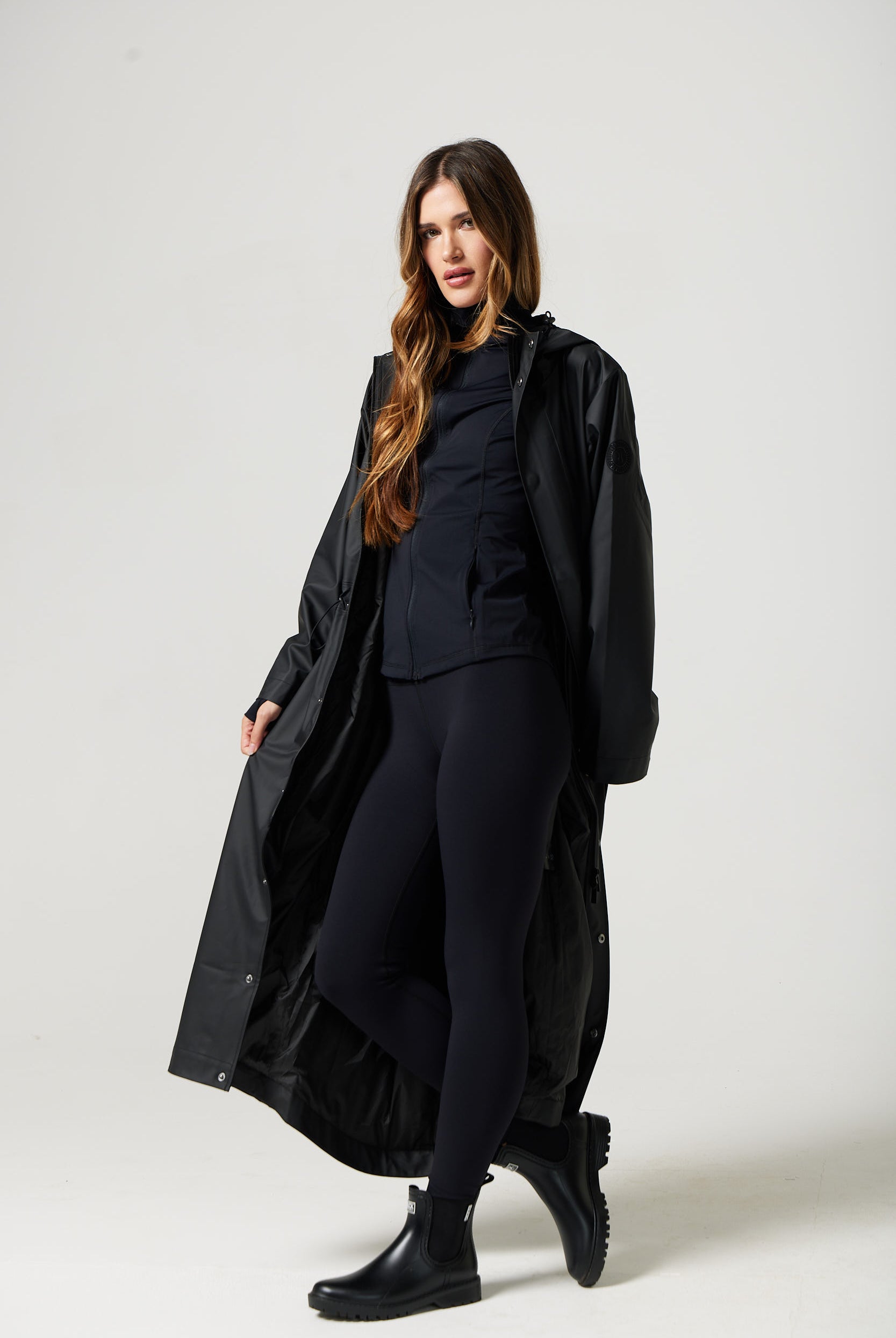
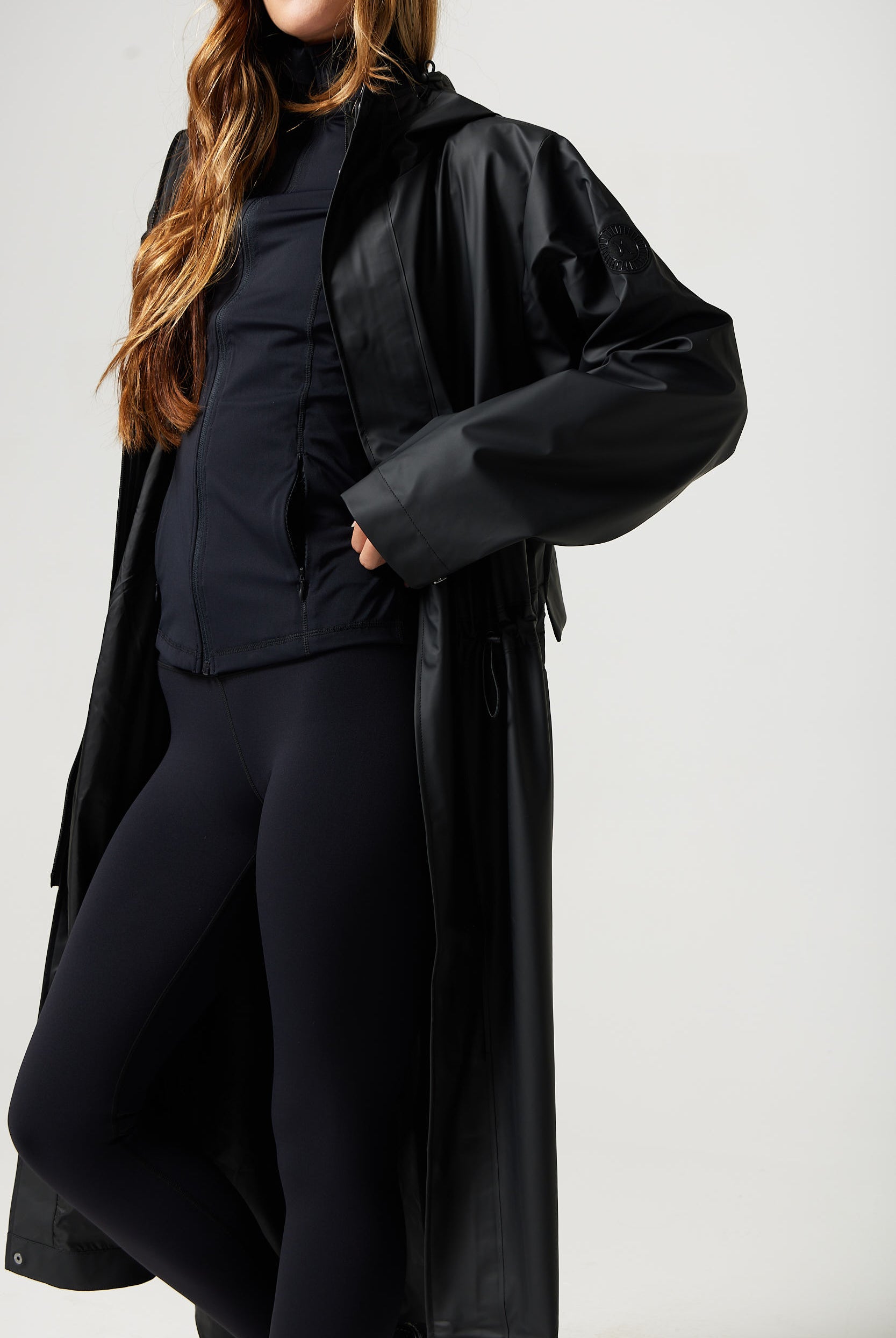
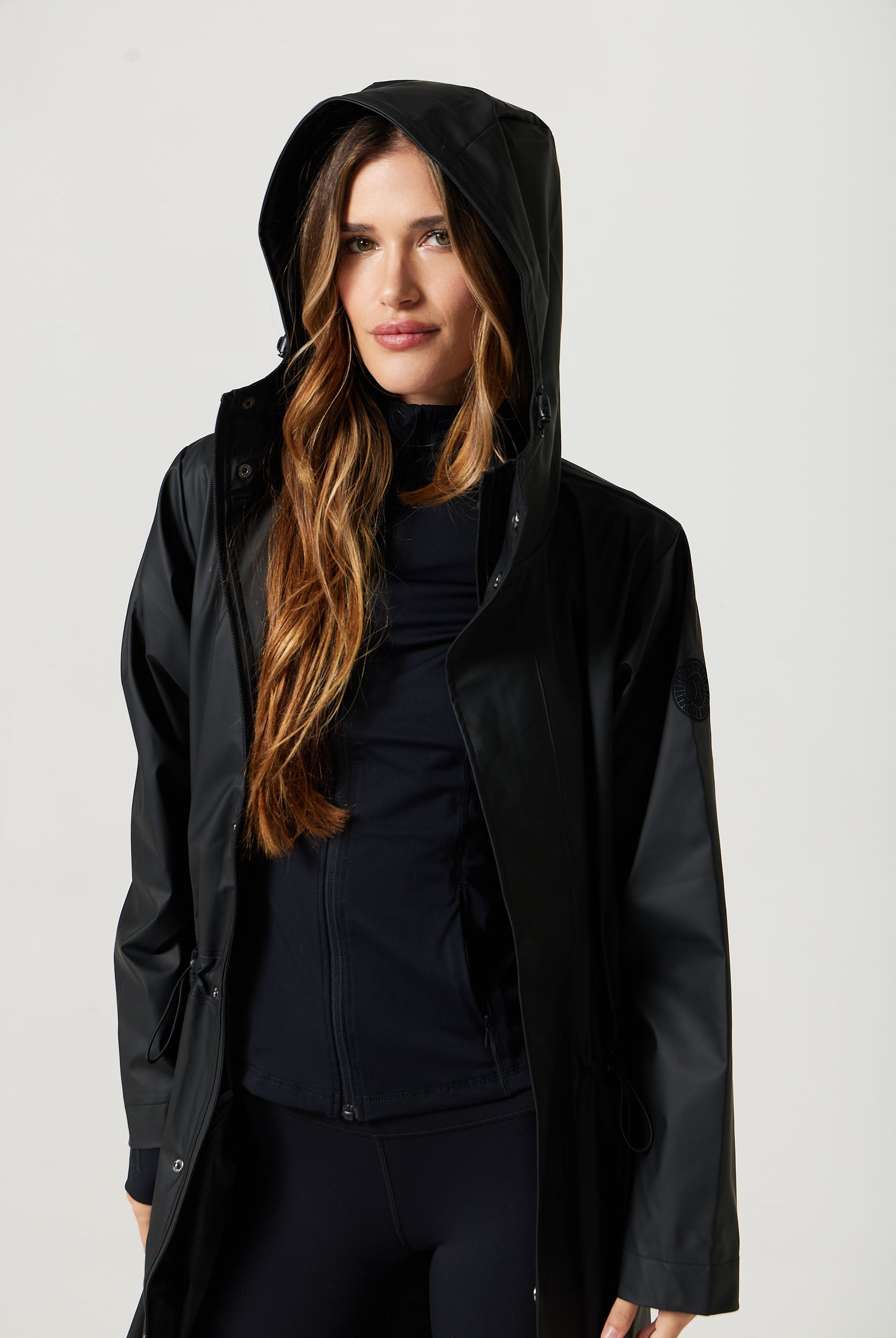
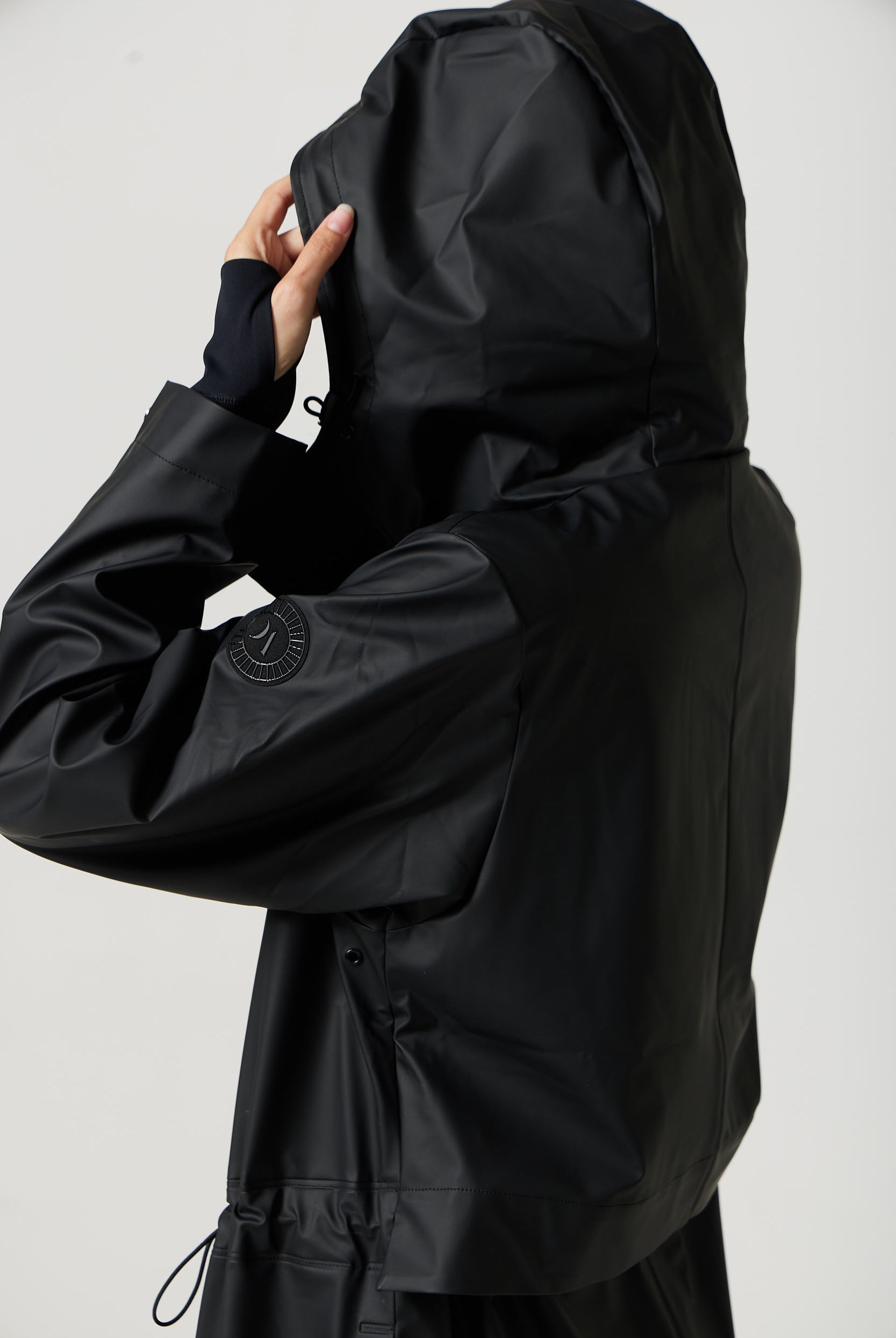
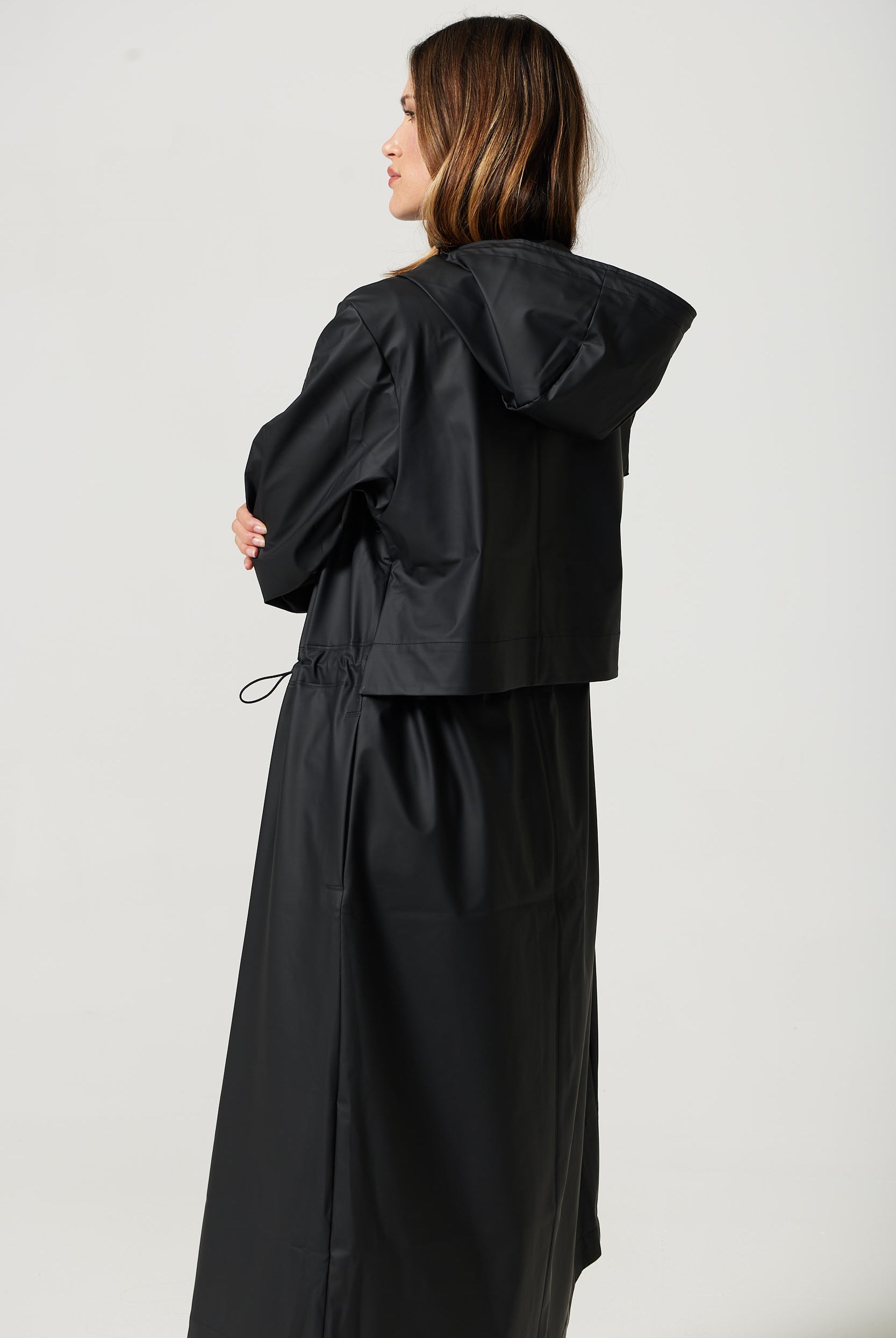
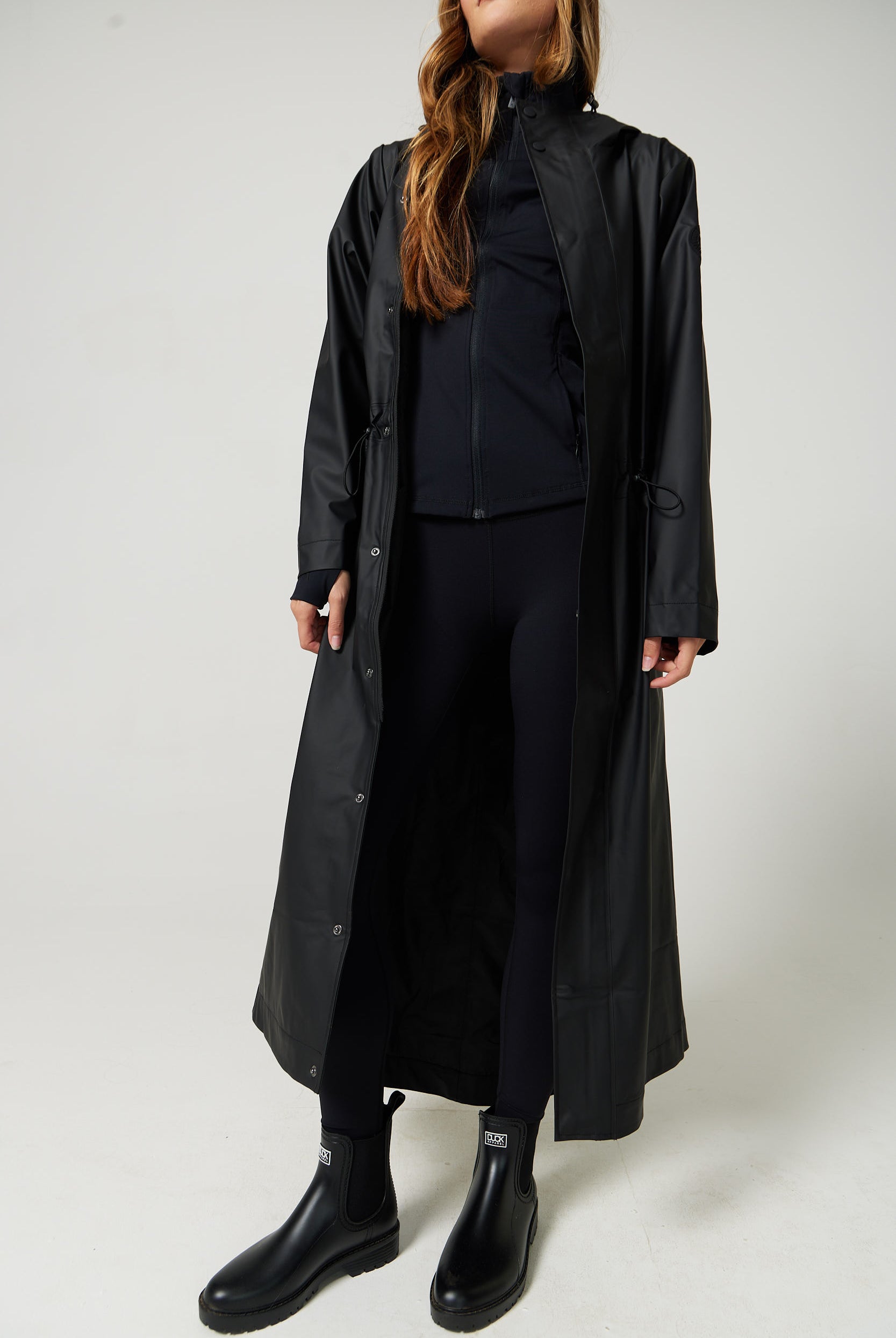
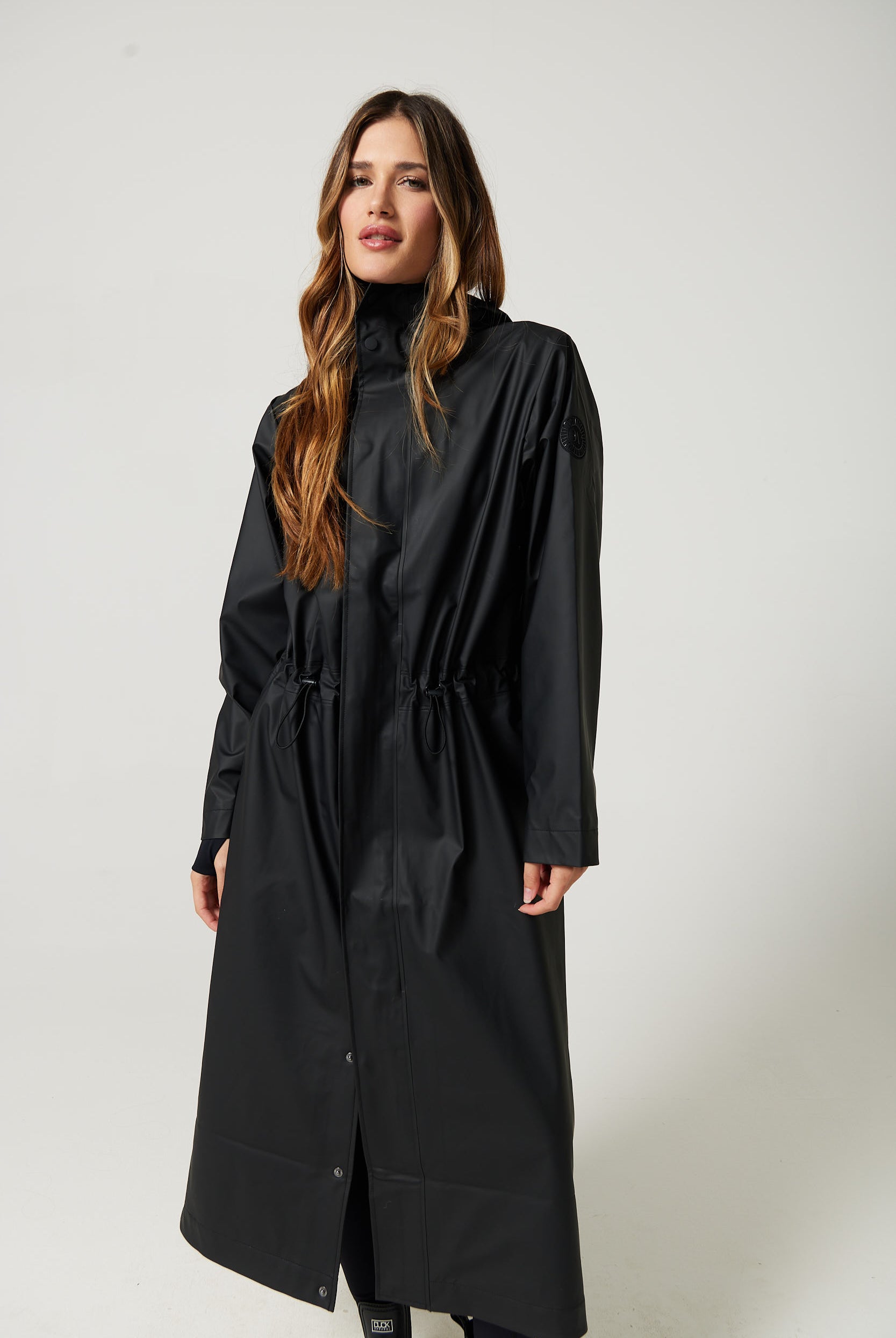
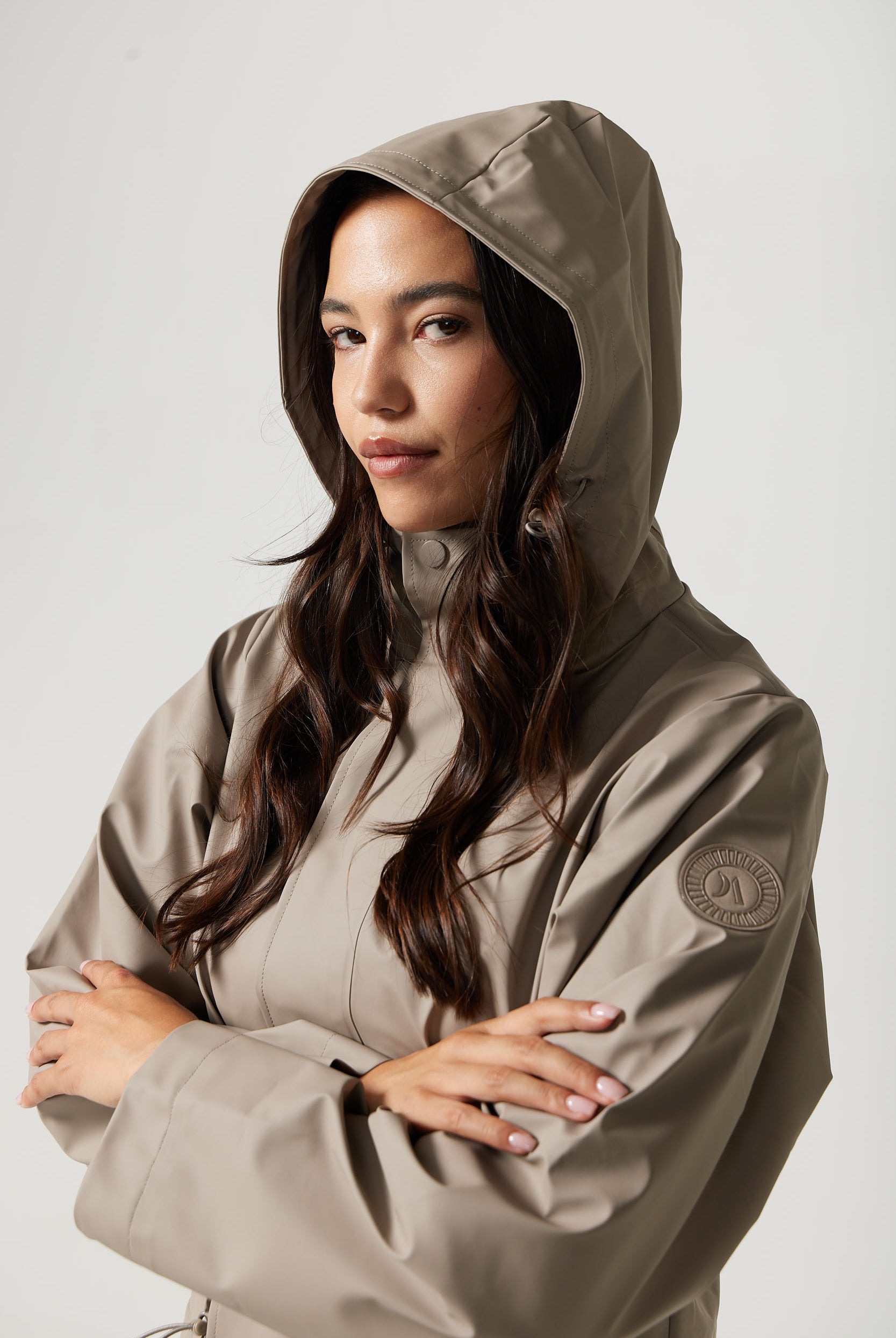
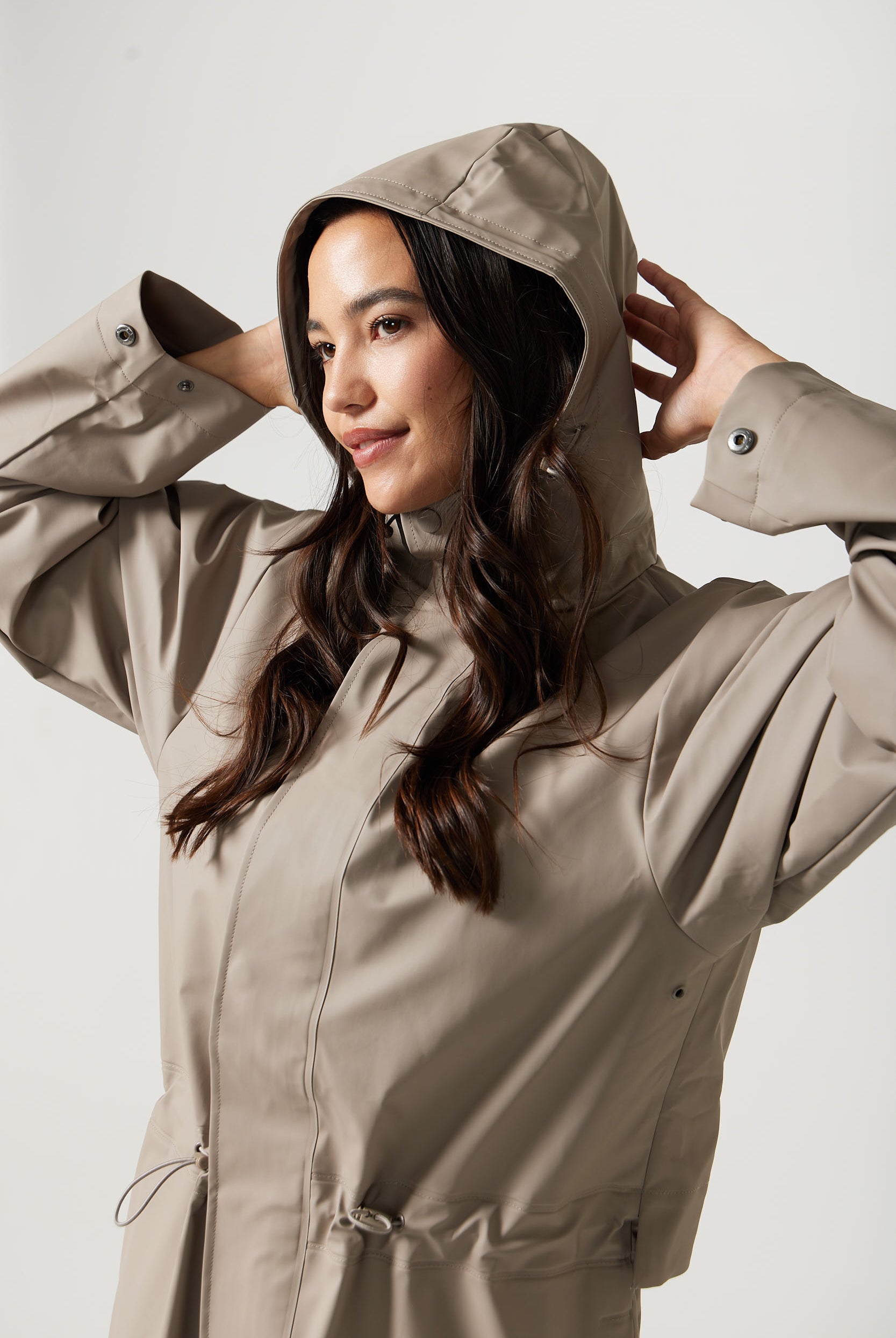
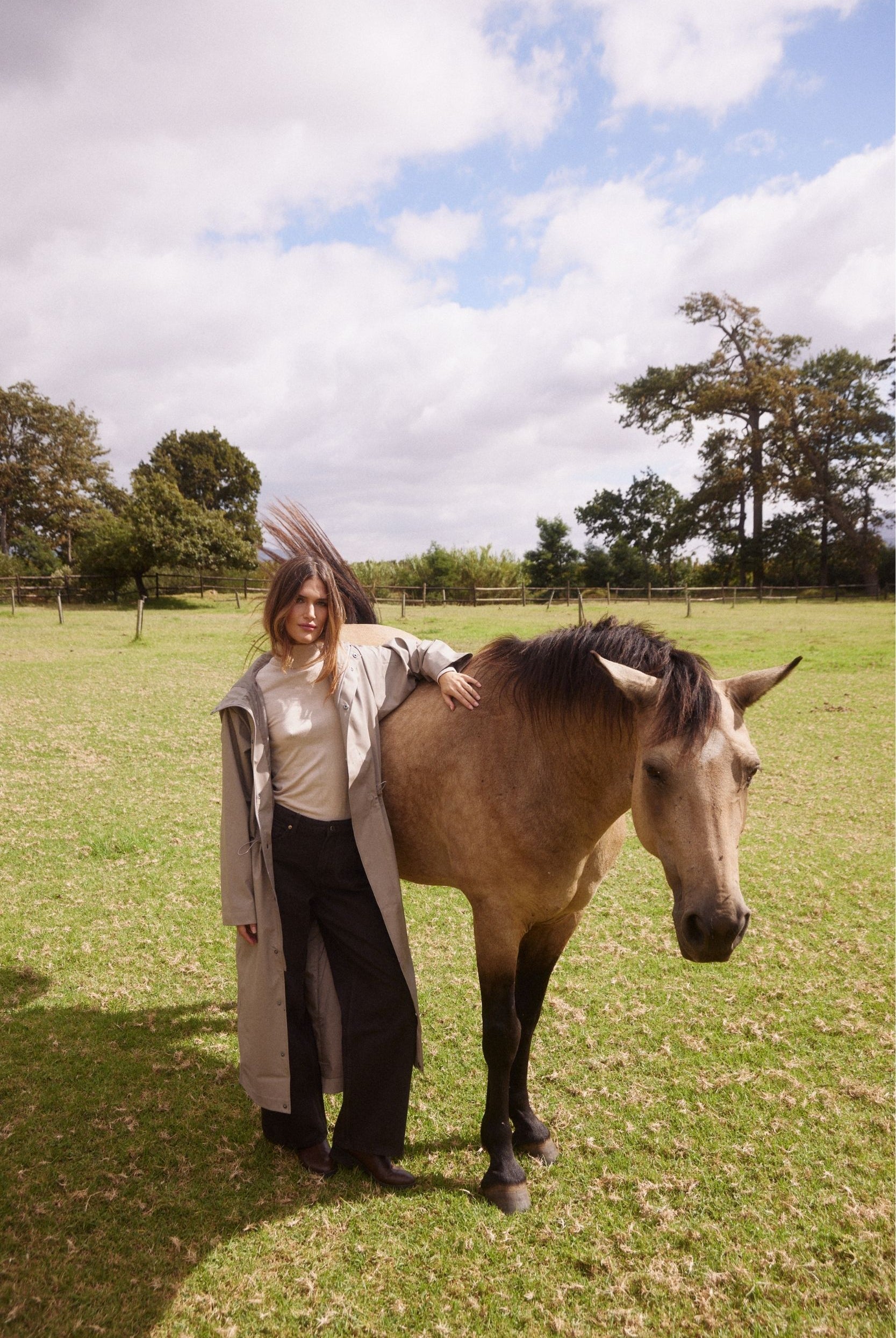
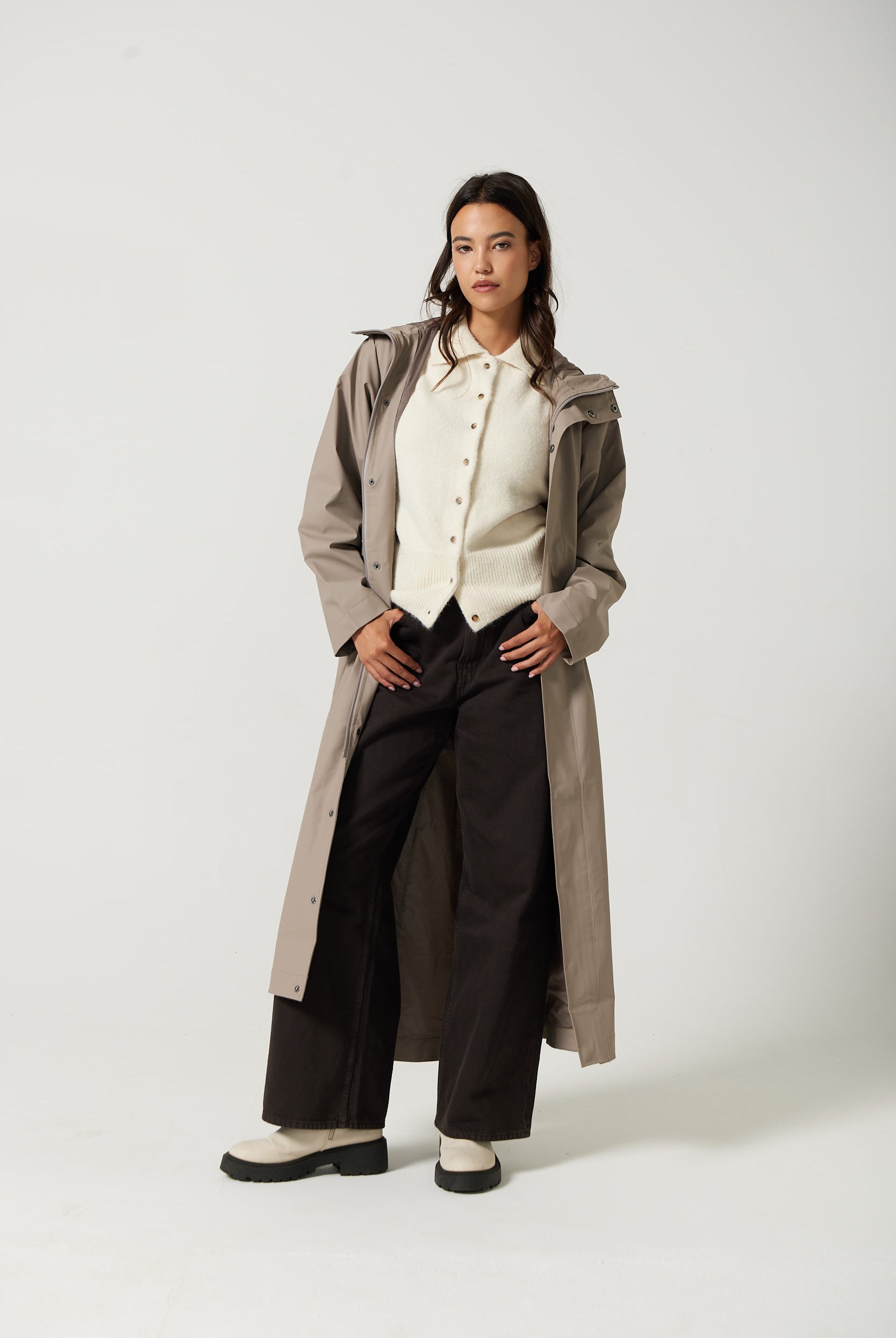
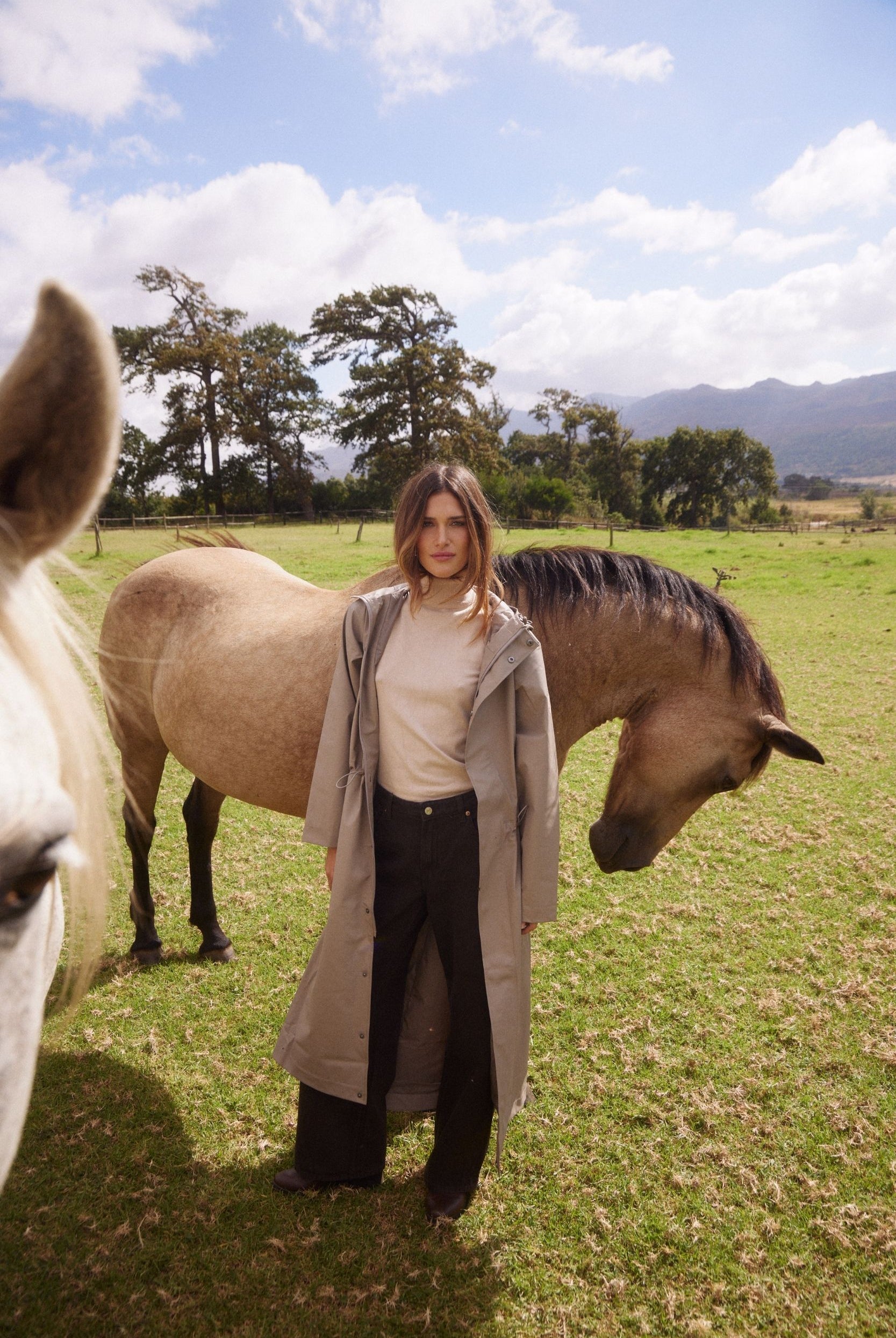
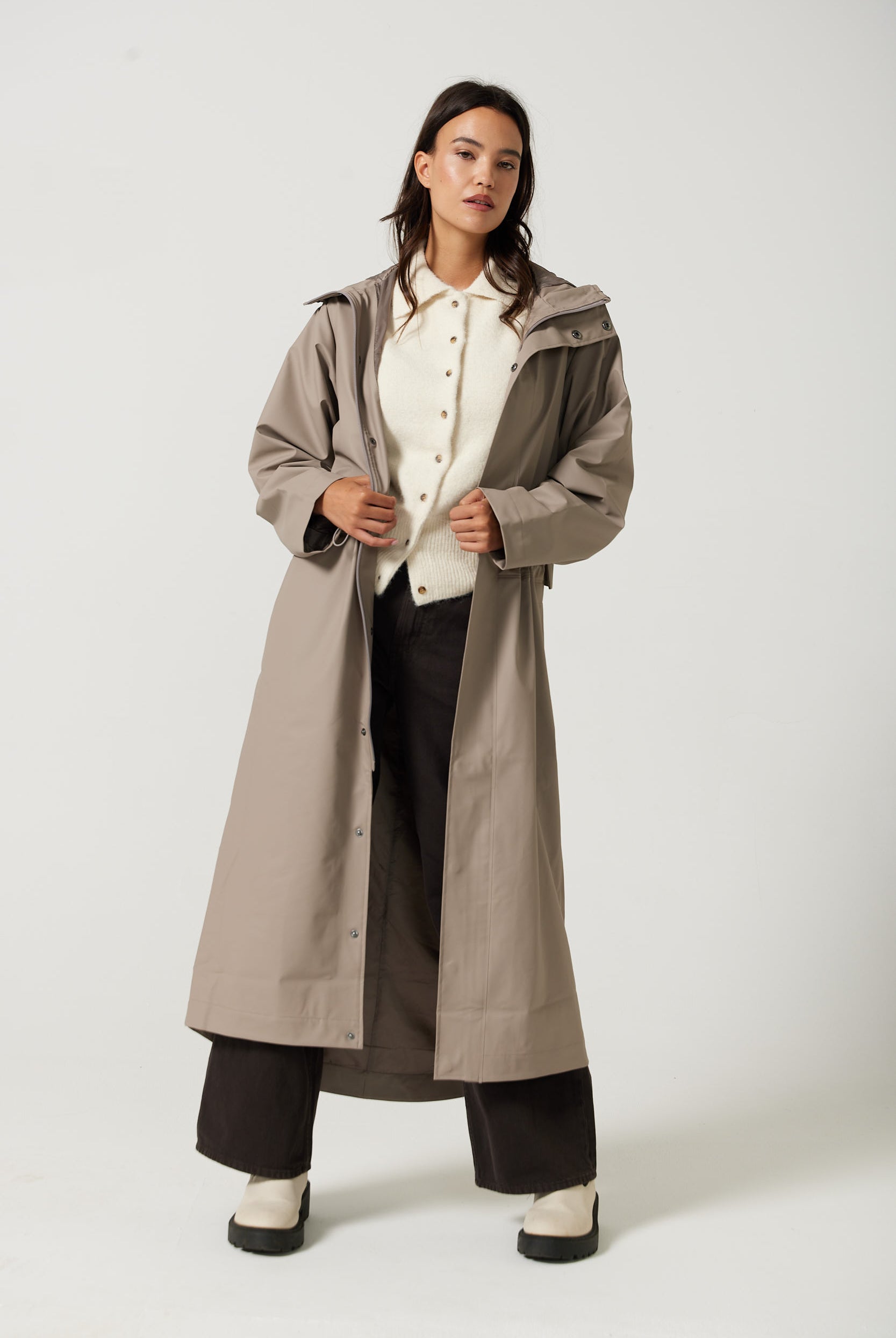
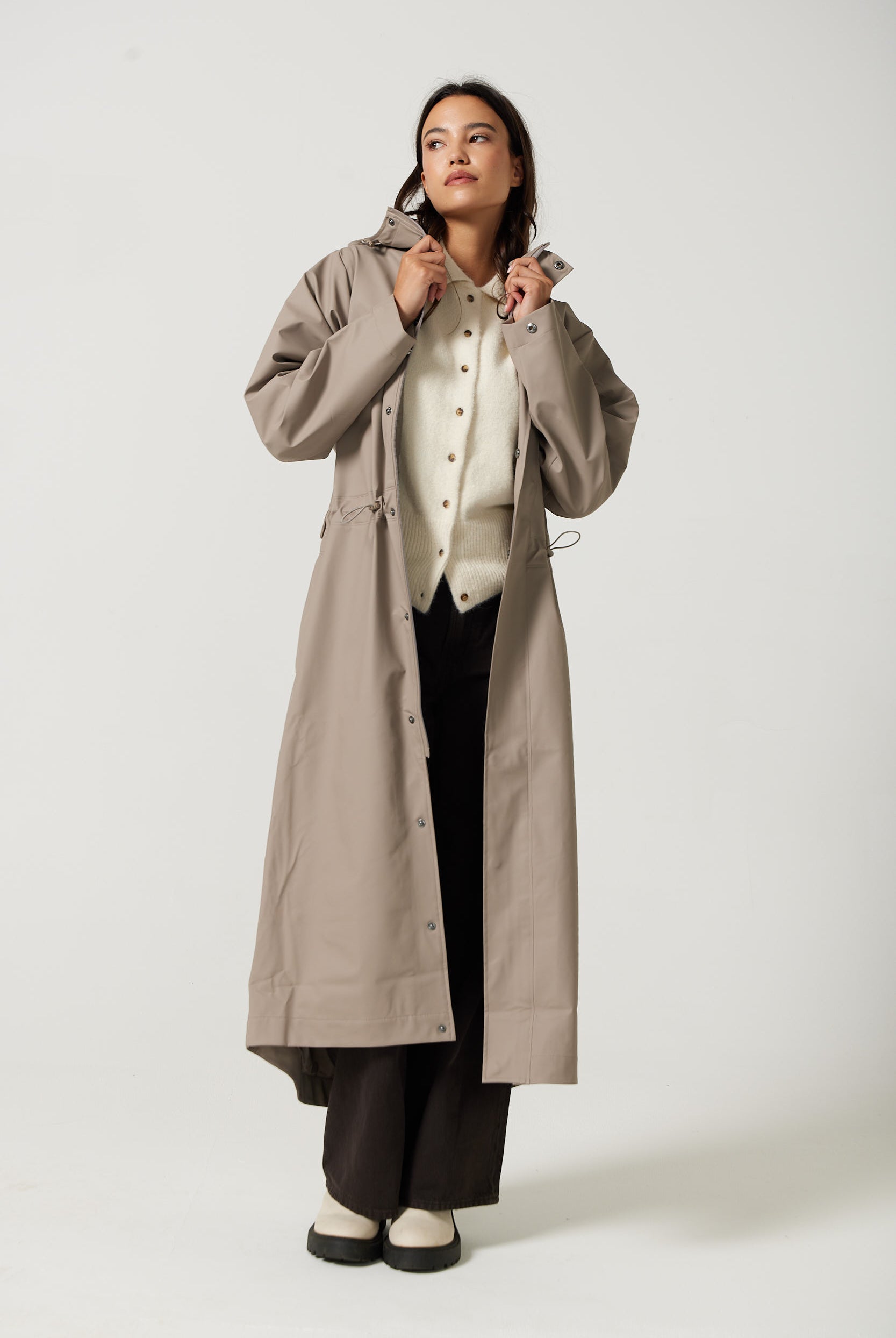
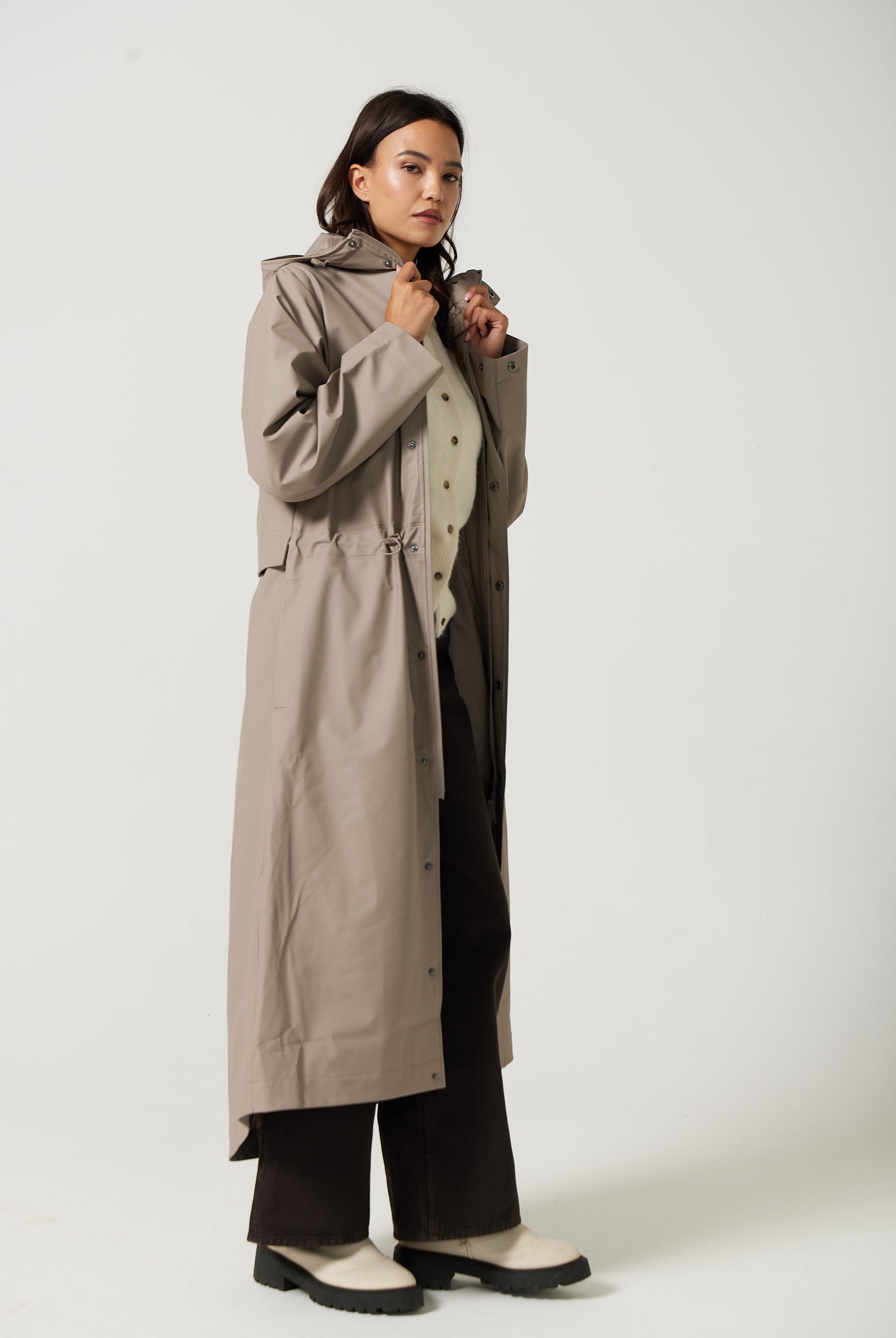
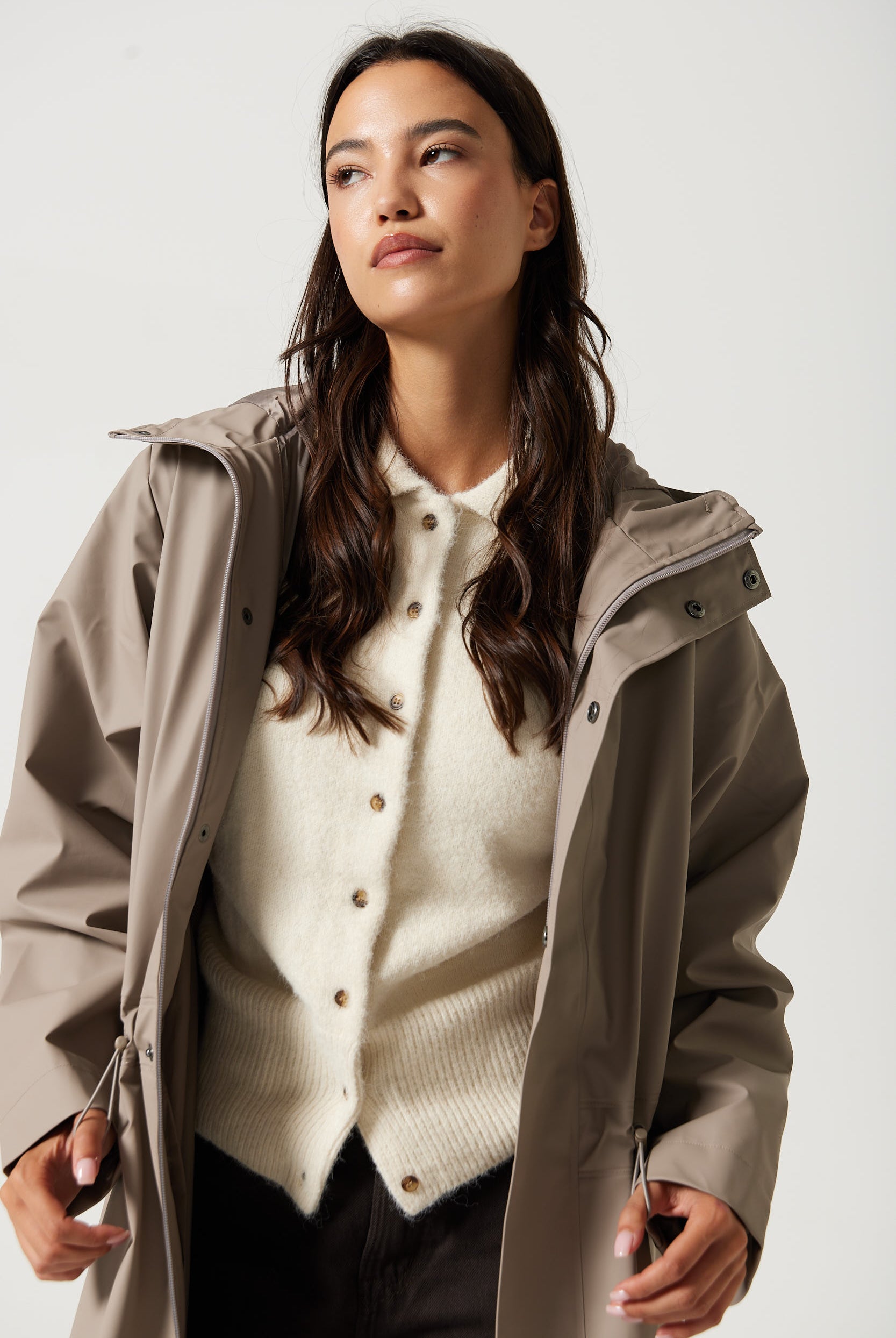
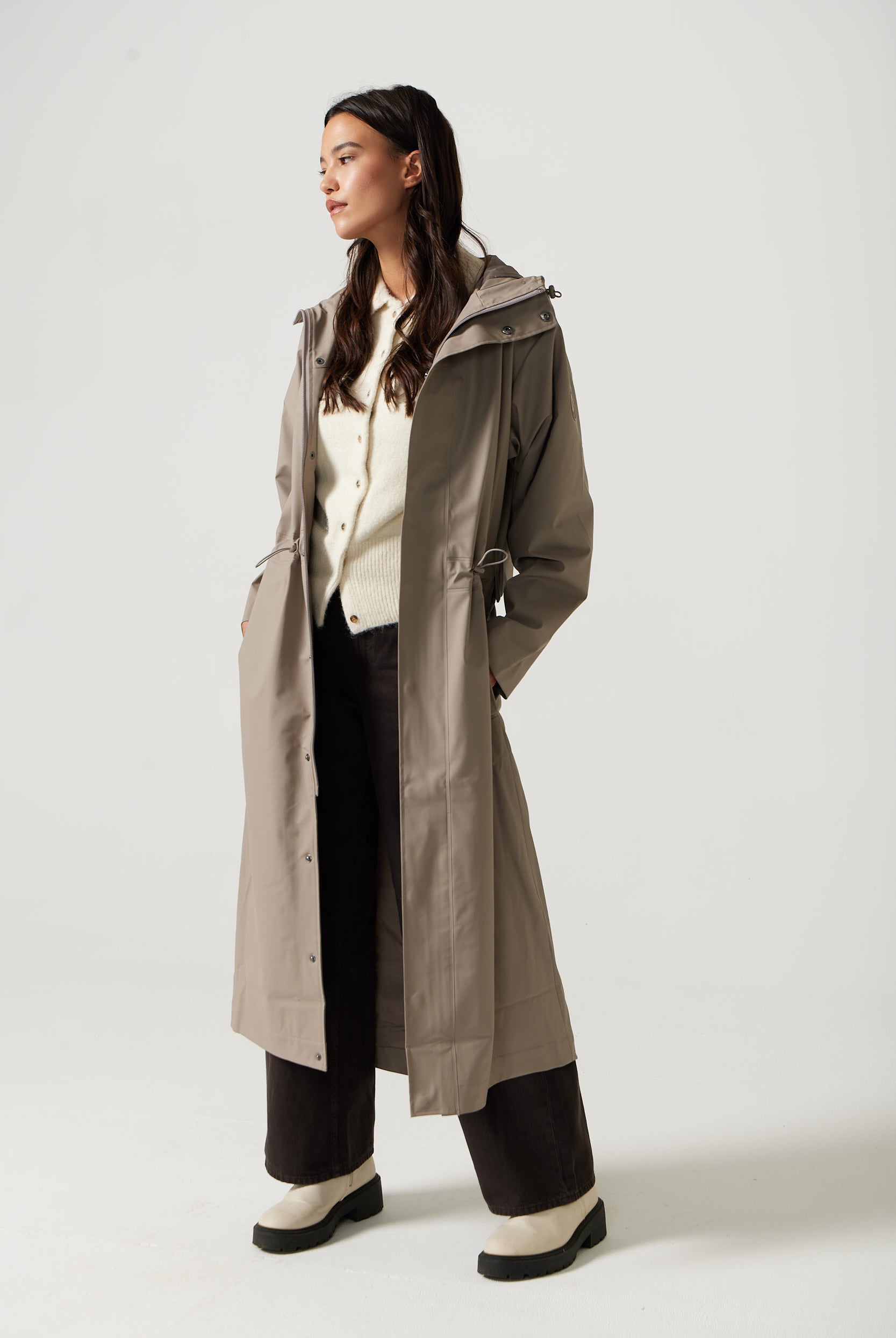
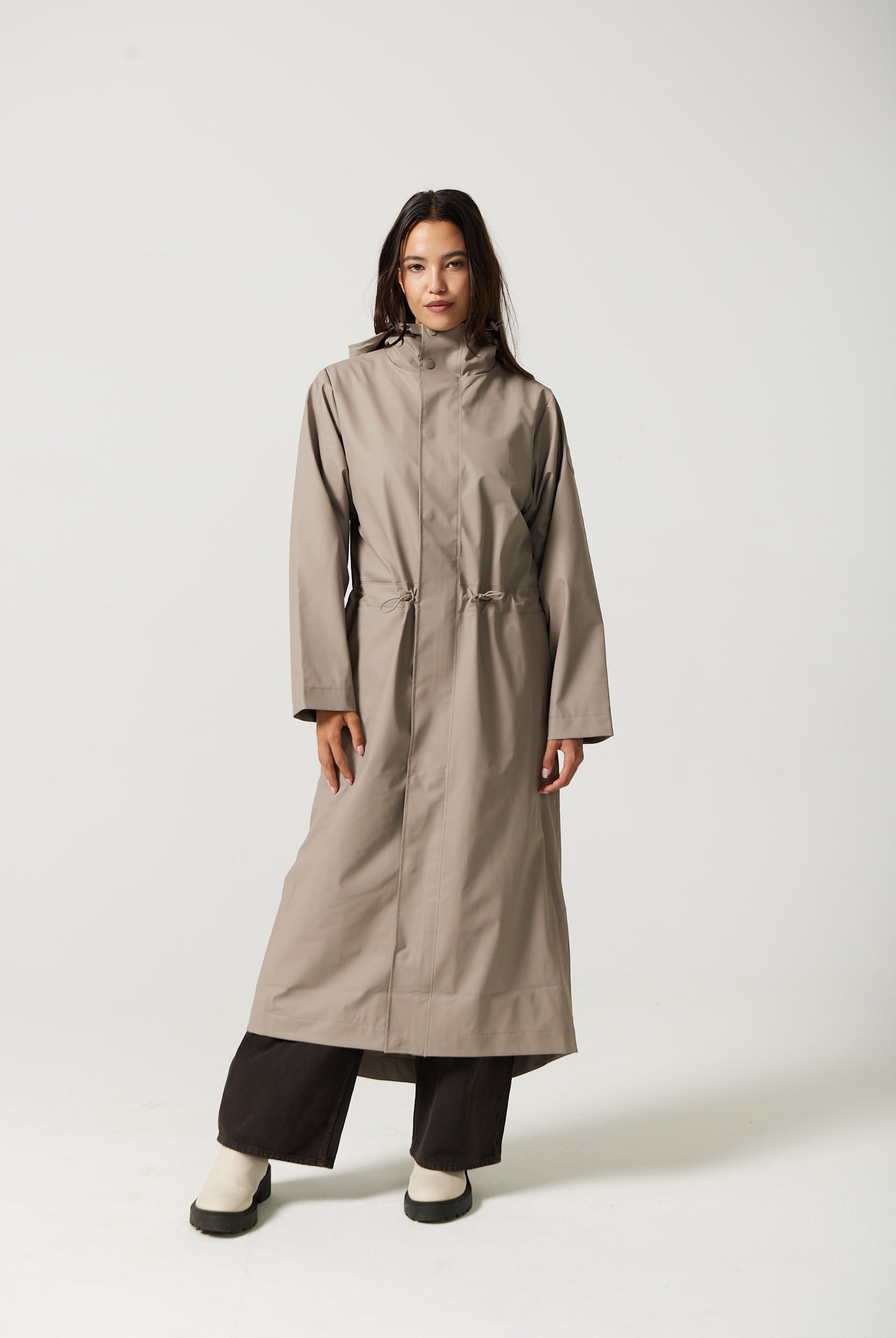
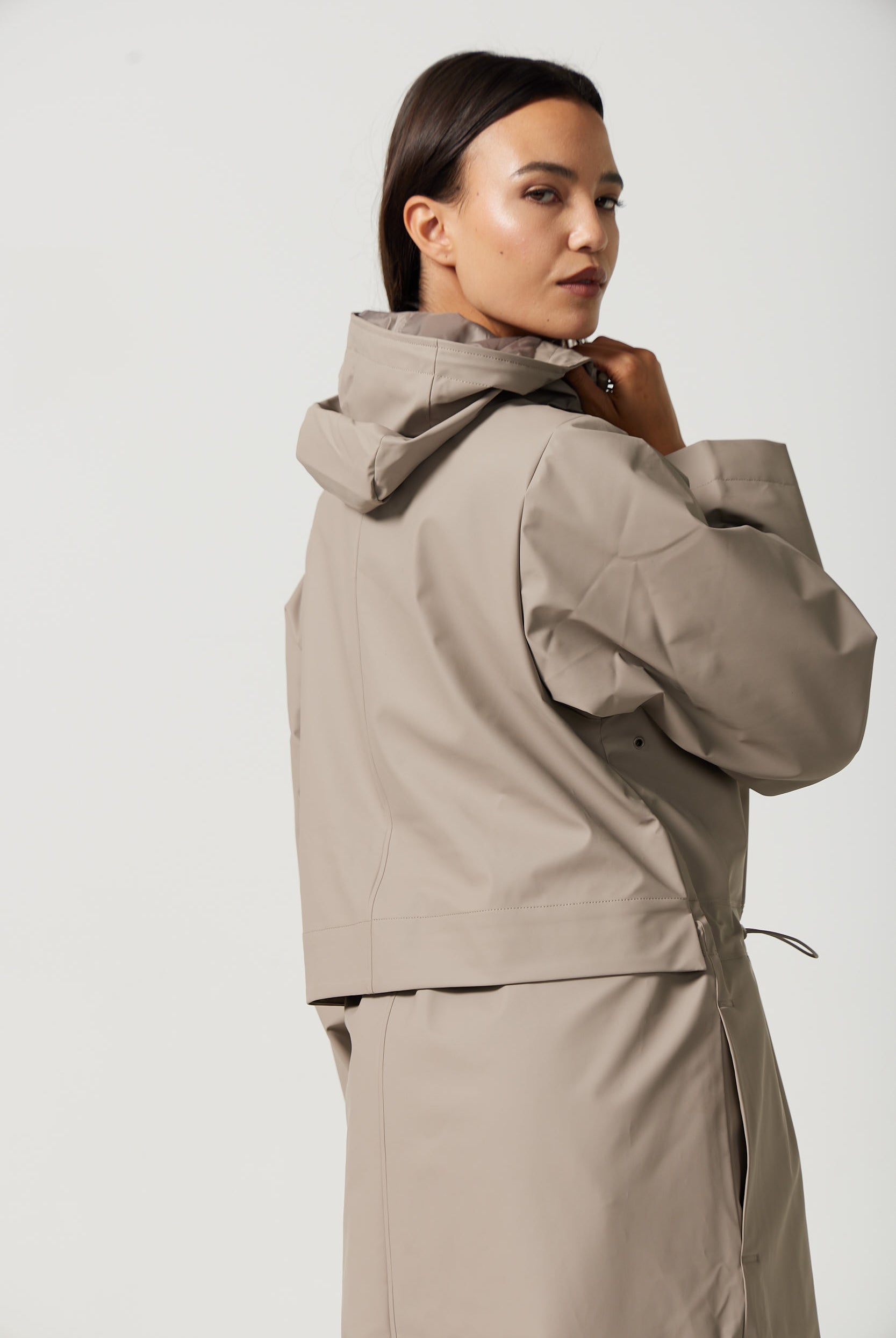
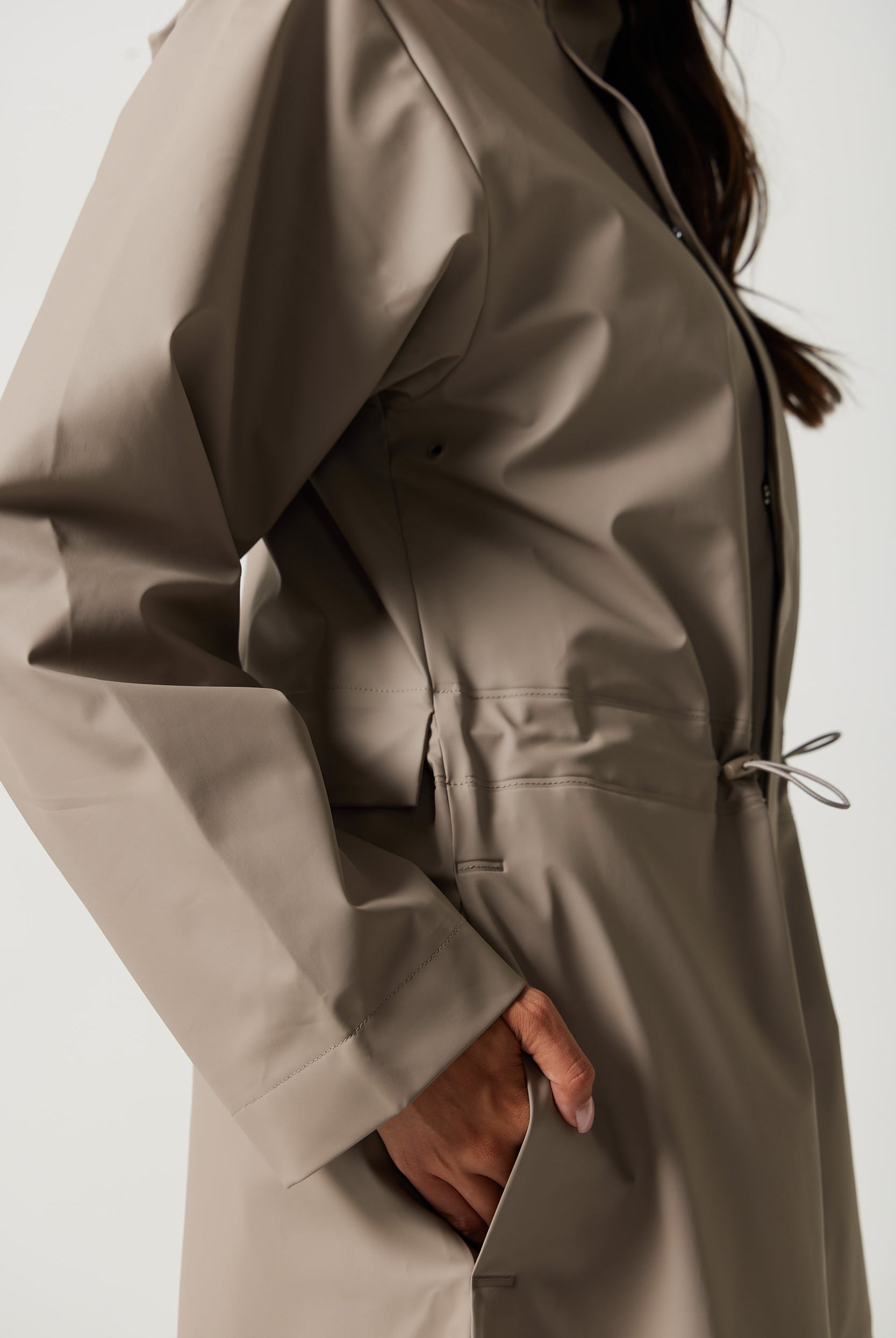
A trench raincoat is a long, belted rain coat cut to shed water while you keep walking, and Duck Apparel makes two of them for the Australian market, The Regent Trench and The Landmark Trench. Both sit on the rain side of the Duck Apparel range rather than the down side, so they are chosen for wet and windy days rather than for the coldest mornings of the year. This page explains what the shape actually does, how to compare the two trenches, and how to decide between a trench raincoat and an insulated coat in Australia.
A trench raincoat earns its place on days that are wet and mild rather than dry and freezing. The cut is long, the front closes over itself, and the belt pulls the waist in so wind cannot push rain up under the hem. That suits a Sydney downpour, a Brisbane storm that arrives in ten minutes, and a Melbourne day that changes its mind four times before lunch. The length matters, because it covers the tops of the legs, which a short jacket leaves exposed at a tram stop.
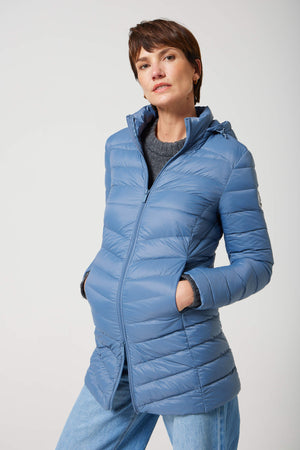
The trade off is warmth. A trench is a shell shape, so it works with layers rather than instead of them. In Australia that usually makes it a March to May and September to November coat, when the air is cool and the sky is unreliable but the temperature never falls far. Through June, July and August in Melbourne, Canberra, Tasmania and the alpine areas, a trench is worn over a jumper or swapped for something insulated.
Buy a trench raincoat when rain is the problem and buy something insulated when cold is the problem. Duck Apparel also splits its wet weather pieces by how heavy the weather is, and the lighter end, made for showers and grey drizzle rather than sustained rain, is grouped in the drizzle weight rainwear range. If your winter is a Perth, Adelaide or Sydney winter, a trench over a knit covers most of the season. If you live in Hobart or Canberra, or you drive up to the snow, treat the trench as a shoulder season coat and keep a warmer layer for the middle of winter.
Size a trench raincoat around what you will wear under it, not around a shirt. Most people in Australia wear one over a jumper for at least half the year, so check the belt still fastens with that layer on. Tying the belt makes the coat warmer and more windproof, and leaving it open makes it read as a longline jacket. After a wet day, hang the coat by the shoulders in moving air instead of folding it away damp, and follow the care instructions on the label.